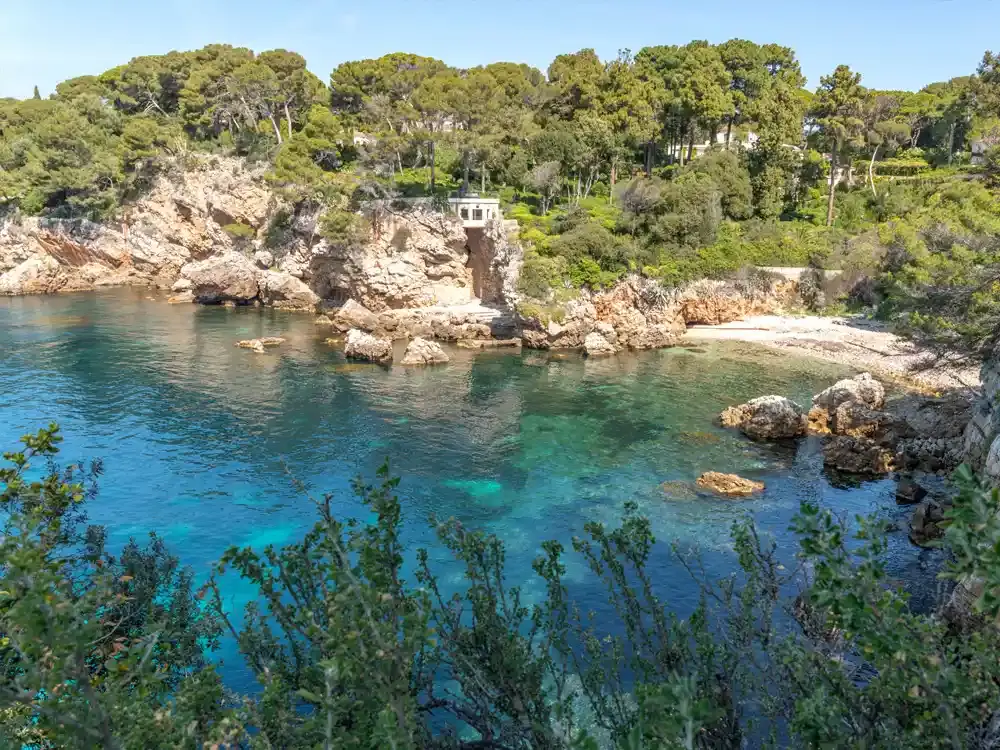




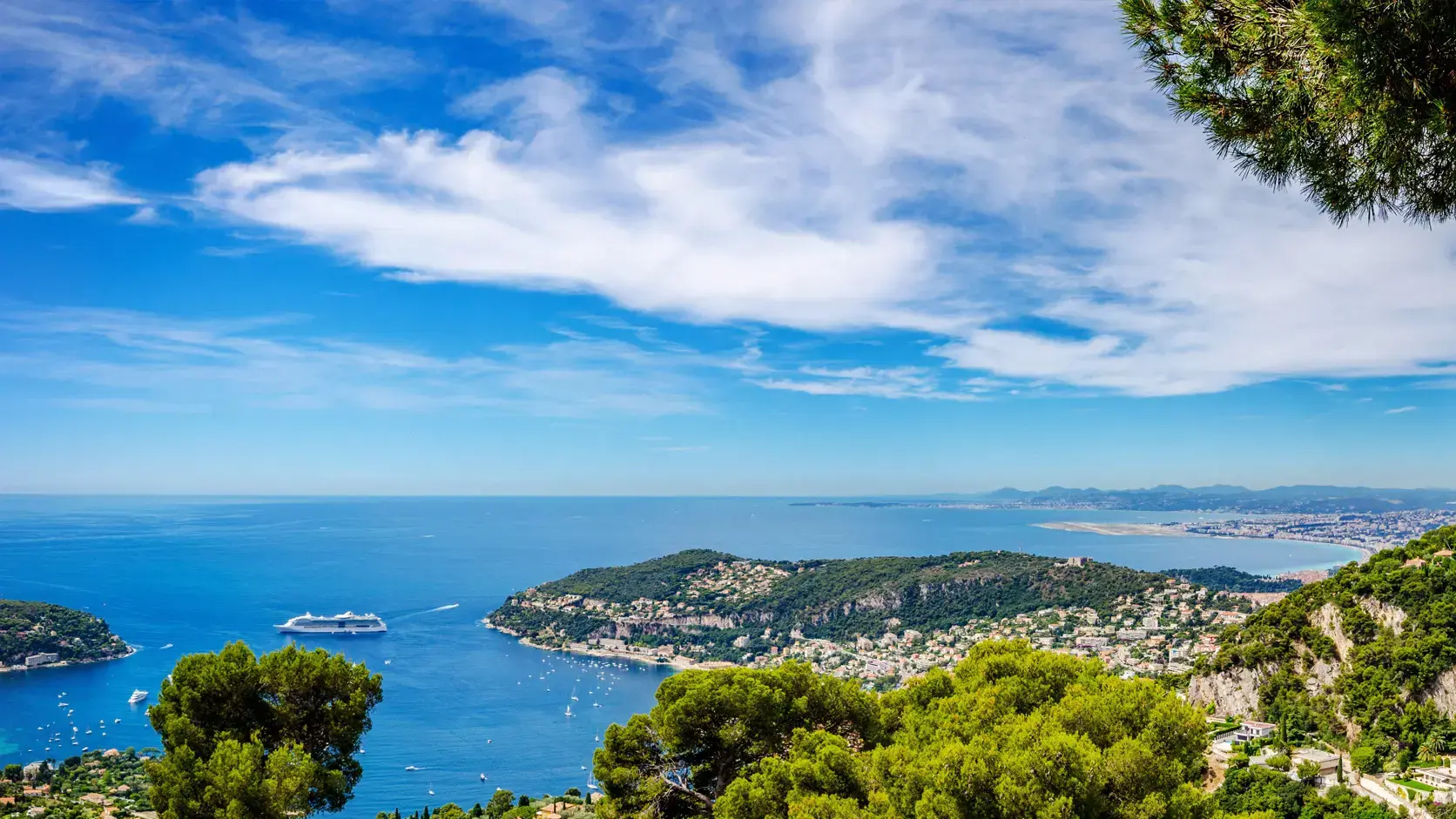
We can answer this question straight away: yes, a foreign national can indeed buy a house, an apartment or a property in France, without needing to be French or even to live in the country.
This is very common in certain markets, particularly in luxury real estate, where foreign buyers account for the majority of purchases. This is especially true of luxury real estate on the French Riviera and the property market in Provence, where a significant proportion of buyers and investors live abroad and are looking for a second home, a pied-à-terre or a property to hold as a long-term asset.
In France, the buyer's nationality is therefore no obstacle to purchasing property. However, buying in France as a non-resident raises a few specific questions: financing, transferring funds, taxation, inheritance, matrimonial property regimes and residency rights.
All of these issues should be considered before buying.
Do you have to live in France to buy a property there?
No, you can live in London, New York, Geneva, Dubai or Singapore and become the owner of a house in France. You will retain your main residence and your tax residency abroad. The purchase will simply be subject to French property law, since the property is located in France.
In practice, the notary will also examine your personal circumstances: your nationality, country of residence, matrimonial property regime, source of funds and how the property will be held. These details may seem secondary during the initial viewings, but they become important when making a significant property investment.
Does buying a house in France give you the right to live there?
This is probably the point that causes the most confusion among foreign buyers.
Owning property in France and having the right to reside there are two different things.
Buying a villa or an apartment does not automatically entitle you to a visa, a residence permit or permanent residency. European Union citizens naturally benefit from much more flexible rules on freedom of movement and residence.
For nationals of countries outside the European Union, entry and residency rules continue to apply, even if they own a house in France.
A British or American citizen can therefore own a second home on the French Riviera without necessarily being able to live there all year round without completing additional formalities.
How does buying a house in France work?
Broadly speaking, the process is the same for French and foreign buyers.
The main difference is that an international transaction sometimes requires more preparation.
Finding the right property
It all starts, of course, with the search.
Location, property type, budget, intended use, transport links, proximity to the sea or international schools: the criteria vary enormously from one buyer to another.
In the luxury market, it is also worth bearing in mind that some properties are not publicly advertised. Certain sales are deliberately kept discreet and are shared mainly among professionals with a strong local network. This is particularly true of the most sought-after villas in Cannes, Saint-Tropez, Saint-Jean-Cap-Ferrat and Cap d'Antibes.
Making an offer
When a buyer wishes to proceed, they submit what is known as an offer to purchase.
The price is not the only element open to negotiation. The timetable, financing conditions and certain terms of the sale can also be discussed.
Once an agreement has been reached, the transaction moves into a more legal phase.
Signing the preliminary sale agreement or promise of sale
The preliminary contract sets out the main terms of the transaction: the property concerned, the price, the deadlines, the financing arrangements and any conditions precedent.
When a private individual purchases a residential property, the buyer benefits from a 10-day cooling-off period after receiving the preliminary contract.
A deposit is also frequently required, often 5 or 10% of the price, but this is not an automatic rule: the amount depends on the terms set out in the contract.
The role of the notary
In France, a notary is an essential part of any property sale, and their role goes well beyond simply arranging the signing of the final deed.
They check the title deeds, the property's legal status, any mortgages, certain planning regulations and applicable pre-emption rights.
When the buyer is a foreign national, they also need to understand the circumstances surrounding the purchase.
For example: in which country does the buyer live? What matrimonial property regime applies? Are the funds coming from a French or foreign bank? Is the property being purchased in the buyer's own name, jointly with another person or through a company?
In a straightforward transaction, these points can be resolved quickly. For a purchase worth several million euros involving multiple countries, they require more advance planning.
Signing the final deed of sale
Once the checks have been completed and the various conditions met, the final deed of sale is signed. The purchase price and acquisition costs are paid to the notary, who then handles the formalities relating to the transfer of ownership.
The buyer then officially becomes the owner.
Contrary to what international buyers sometimes believe, it is not always necessary to return to France just to sign. Depending on the circumstances, a power of attorney may allow certain transactions to be completed remotely.
How much time should you allow?
There is no single timeframe for all sales. In many cases, you should allow around three months between the preliminary contract and the final signing, sometimes longer.
Several factors can extend the timetable: securing financing, pre-emption rights, a particular legal structure, missing documents or constraints relating to transferring funds from abroad.
For an international buyer, the best way to avoid delays is often to prepare the banking and wealth-planning aspects before even finding a property.
What costs should you budget for on top of the price?
The purchase price does not represent the total cost of the transaction.
You must also factor in acquisition costs, commonly referred to as “notary fees”.
This term is actually somewhat misleading, since only part of these sums is paid to the notary. A large proportion consists of taxes and duties collected on behalf of the French government and local authorities.
The amount varies depending, in particular, on the type of property and its location. For an existing home, these costs are significantly higher than for certain new-build purchases.
Depending on the circumstances, other expenses may arise: financing, document translation, legal or tax advice, setting up a company or structuring property ownership.
Can a foreign national obtain a mortgage in France?
Yes.
French banks lend to non-resident buyers, although their criteria are generally stricter.
They will assess, among other things, the buyer's income, assets, debt, deposit and country of residence. The currency in which their income is received also matters.
A buyer paid in US dollars or pounds sterling is not assessed in exactly the same way as a borrower whose income is in euros.
At the luxury end of the market, banks may take a different approach again, as financing is often considered within the broader context of the buyer's overall wealth.
It may therefore be worth exploring financing options very early on, even before making an offer.
What about transferring funds from abroad?
This is a very practical issue that is sometimes underestimated.
When a substantial sum arrives from abroad to finance a property purchase, the banks and the notary must be able to establish its source.
The buyer may be asked to provide supporting documents relating to employment or business income, the sale of a business or another property, an inheritance or financial assets.
These checks are not specific to foreign buyers. They form part of France's anti-money laundering requirements.
For a purchase funded in another currency, a further issue arises: currency exchange.
On a transaction worth several million euros, a change in the EUR/USD, EUR/GBP or EUR/CHF exchange rate can make a significant difference to the final purchase cost.
What taxes apply to foreign property owners?
Owning property in France generally entails certain French tax obligations, even when the owner lives in another country.
Property tax (taxe foncière) applies to all owners, whether French or foreign.
For a second home, other taxes may also apply depending on the municipality and the property's circumstances. If the property is rented out, rental income may be taxable in France.
Real estate wealth tax (IFI) is also a particularly important consideration for buyers of prestige properties.
Non-residents may be liable for this tax on property they own in France when their taxable real estate assets exceed the thresholds set by law.
Finally, any capital gain on resale may also be taxed in France.
The precise tax treatment will, however, depend on the buyer's circumstances and the tax treaties in place between France and their country of residence.
For a substantial property purchase, it is therefore often wise to consider taxation before buying, rather than several years later when selling or passing the property on.
Should you buy in your own name or through an SCI?
This question comes up frequently, particularly among families from abroad.
A Société Civile Immobilière, or SCI, is a French property-holding company commonly used for joint property ownership.
It can make sense for certain family or wealth-planning arrangements, particularly when several people are buying together or wish to plan how the property will be passed on. But it is not a one-size-fits-all solution.
In some cases, buying directly in your own name will be much simpler; in others, an SCI or another ownership structure may offer advantages.
The right choice depends on the owners' country of residence, family circumstances, tax position and long-term objectives. It is better to address this question before buying than to try to restructure ownership afterwards.
Where do foreign buyers invest in France?
There is, of course, no single French property market.
Paris has long attracted an international clientele looking for an apartment, a pied-à-terre or a long-term property investment.
In the south of the country, the French Riviera remains one of France's most international property markets.
Cannes, Saint-Tropez, Saint-Jean-Cap-Ferrat, Cap d'Antibes and the area around Monaco offer a concentration of ultra-luxury villas and properties sought after by buyers from Europe, the United States, Switzerland and the Middle East.
In Provence, expectations are often different.
Buyers tend to seek traditional country houses, farmhouses or large estates around Aix-en-Provence, the Alpilles or the Luberon.
Ultimately, the choice of region depends less on the buyer's nationality than on their plans: a second home, an investment, quality of life, family use or the search for a rare asset to add to their portfolio.
Buying a prestige property in France while living abroad
French regulations do not make buying property particularly difficult for foreign nationals.
The real challenge lies elsewhere. When buying a prestige property, you need to be able to assess the market accurately, identify genuinely attractive properties, ensure a secure transaction and coordinate the various parties involved.
This becomes even more important when the buyer is several thousand kilometres away and cannot make repeated viewing trips.
Since 1977, Michaël Zingraf Real Estate has supported French and international clients in buying and selling prestige properties in France.
Its presence in the main markets of southern France and its exclusive affiliation with Christie's International Real Estate for the Provence-Alpes-Côte d'Azur region enable it to support foreign buyers from their initial search through to signing for their property.
Frequently asked questions
Can an American buy a house in France?
Yes. A US citizen can buy a house, apartment or villa in France without being a French resident.
However, owning property does not automatically grant them the right to permanent residence.
Can British citizens still buy property in France after Brexit?
Yes. Brexit has not removed British nationals' right to buy and own property in France.
The main changes concern residency rules, as British citizens no longer enjoy the same status as European Union nationals.
Do you need to open a French bank account?
It is not necessarily a legal requirement when buying property.
In practice, however, a French account can make it easier to pay property charges, taxes and bills, and to manage a second home on a day-to-day basis.
Can you buy a house in France without living there?
Of course.
This is precisely the case for many second homes owned by foreign nationals.
Does buying a house entitle you to French residency?
No. Buying property and obtaining the right to reside in France are two separate processes.
Can you buy property in France without speaking French?
Yes. However, the buyer must fully understand what they are signing.
For a major transaction, support from professionals accustomed to working with international clients is therefore particularly helpful.

A lire aussi