



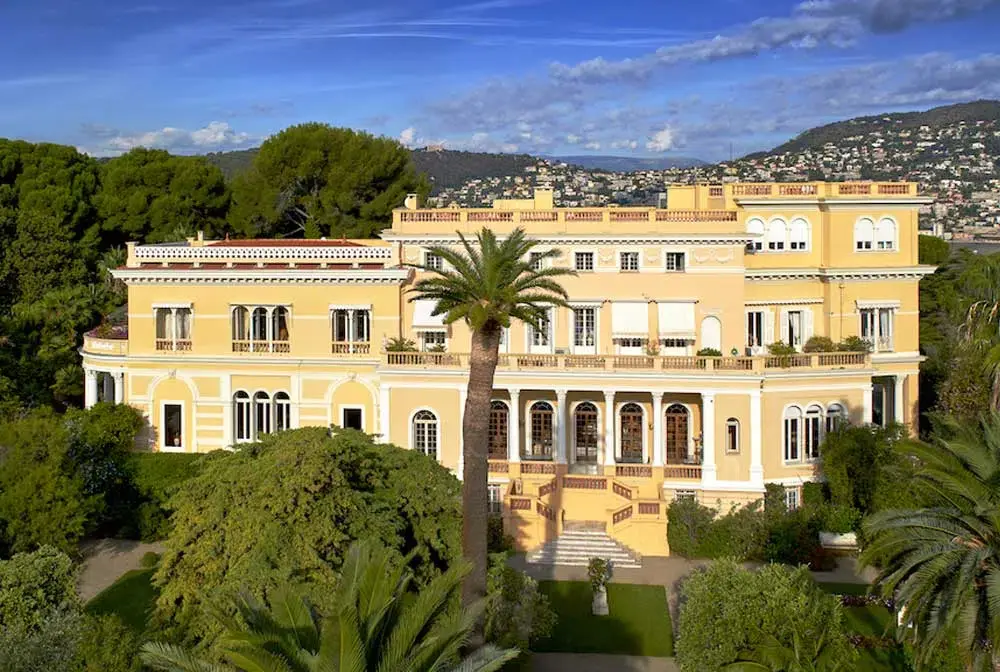
Former residence of King Leopold II of Belgium, then owned by the Marnier-Lapostolle family, the estate has spanned nearly two centuries of history. Long described as one of the most expensive homes in the world, Villa Les Cèdres is distinguished above all by a combination that has become almost impossible to find: several hectares in Cap-Ferrat, preserved architectural heritage, and one of the largest private botanical collections in Europe.
A historic property in the heart of Cap-Ferrat
From farmland to Villa Les Oiseaux
Long before becoming one of the most prestigious addresses on the French Riviera, the Cèdres site was essentially agricultural. The land was notably devoted to olive cultivation, in an environment still largely untouched by urbanization.
In the 1850s, David-Désiré Pollonnais, who would later become mayor of Villefranche-sur-Mer, gradually acquired the estate. He commissioned Nice architect Sébastien-Marcel Biasini to build or rebuild a holiday residence then known as Villa Les Oiseaux.
The property already included a villa, outbuildings, stables, and the Saint-François-de-Sales chapel, built in the 18th century. The first exotic species were also introduced into the park at this time, foreshadowing the estate’s future botanical vocation.
Leopold II’s acquisition of the estate
In 1904, King Leopold II of Belgium acquired the property and renamed it Villa Les Cèdres. Already the owner of several plots on the Riviera, the monarch undertook to enlarge and profoundly transform the estate.
Until 1908, he brought together several neighboring parcels to form a single, contiguous property. He enlisted architect Aaron Messiah to alter the façades and reorganize certain interior spaces of the villa. A winter garden, a new caretaker’s lodge, and modernized stables completed the ensemble.
Villa Les Cèdres then became a true royal residence, benefiting from sweeping landscape views and a privileged location in the immediate vicinity of Villefranche-sur-Mer Bay.
The gardens created under Leopold II’s impetus
Leopold II placed a central emphasis on the landscaping of the gardens. From 1905 onward, he entrusted their transformation to several renowned landscape designers, among them Élie Lainé, Jules Vacherot, and Harold Peto.
The work profoundly altered the estate’s topography. Terraces, formal parterres, reflecting pools, pergolas, pathways, and garden ornaments were laid out around the villa.
Jules Vacherot notably designed part of the terraced gardens, while Harold Peto worked on the reflecting pool and the water avenue. Statues, balustrades, a rose garden, an orangery, and a fake ruin inspired by antiquity enriched this spectacular landscape composition.
After Leopold II’s death in 1909, the estate went through a more uncertain period. During the First World War, part of the property was used as a Belgian military hospital.
The Marnier-Lapostolle family and the creation of the botanical garden
In the early 1920s, Villa Les Cèdres entered a new phase in its history. Alexandre Marnier-Lapostolle, a member of the family behind the Grand Marnier liqueur, acquired the estate and undertook the restoration of its buildings and gardens.
The landscape structures created under Leopold II were preserved, while new statues and many exotic species were introduced. A Mexican garden was notably laid out in the mid-1920s.
From 1928 onward, Julien Marnier-Lapostolle took over the estate and developed an exceptionally ambitious botanical project. Passionate about plant acclimatization, he gradually assembled a collection of plants from various tropical and subtropical regions of the world.
Bitter orange trees were also cultivated on the property. Their bitter oranges have historically been associated with the production of Grand Marnier, strengthening the link between the estate and the history of the Marnier-Lapostolle family.
An exceptional fourteen-hectare botanical garden
The Cèdres estate extends over approximately fourteen hectares, an exceptional size today in Saint-Jean-Cap-Ferrat. Its park combines formal gardens, historic terraces, ponds, and areas devoted to the preservation of rare plants.
Thanks to the peninsula’s particularly mild microclimate, thousands of plant species originating from Africa, Latin America, Asia, and Oceania have been acclimatized there. Palms, cycads, cacti, succulents, tropical trees, and Mediterranean species create a landscape of extraordinary diversity.
Numerous greenhouses make it possible to protect the most delicate plants. From the 1950s onward, the development of collaborations with botanists and international scientific institutions helped give the Cèdres garden worldwide renown.
The park, botanical gardens, greenhouses, statuary, garden ornaments, and the Saint-François-de-Sales chapel have been partially listed as Historic Monuments since 2021.
A residence of exceptional scale
The main villa offers a living area generally estimated at nearly 1,700 m². Its classical façades, imposing volumes, and large openings onto the gardens bear witness to the various transformations carried out between the 19th century and the early 20th century.
The house is said to contain around fifteen bedrooms, vast reception rooms, and a library devoted notably to botany and natural history. The interiors combine woodwork, moldings, classical décor, and antique furniture.
The estate also includes a pool close in size to an Olympic swimming pool, historic stables, a chapel, several outbuildings, and an extensive greenhouse complex.
Beyond these amenities, the value of the property lies above all in the extent and continuity of its land. Multi-hectare estates have become extremely rare on the peninsula, where the majority of the large historic properties were divided up during the 20th century.
One of the most significant real estate sales on the French Riviera
Villa Les Cèdres became part of the Campari Group’s assets in 2016, when it acquired Société des Produits Marnier-Lapostolle, owner of the Grand Marnier brand.
The group quickly decided to sell this real estate asset, which did not directly align with its core business. The property was then presented in the international press as one of the most expensive homes ever put on the market.
After several years of discreet marketing, the sale was officially completed in October 2019 for a sum of 200 million euros. This transaction ranks among the largest residential sales ever recorded in France and on the French Riviera.
It is therefore important to distinguish between the asking price during the marketing period and the final amount of the transaction. Villa Les Cèdres has sometimes been described as “the most expensive house in the world,” but this label was based mainly on its listing price and its exceptional nature.
Why does Saint-Jean-Cap-Ferrat reach such levels of value?
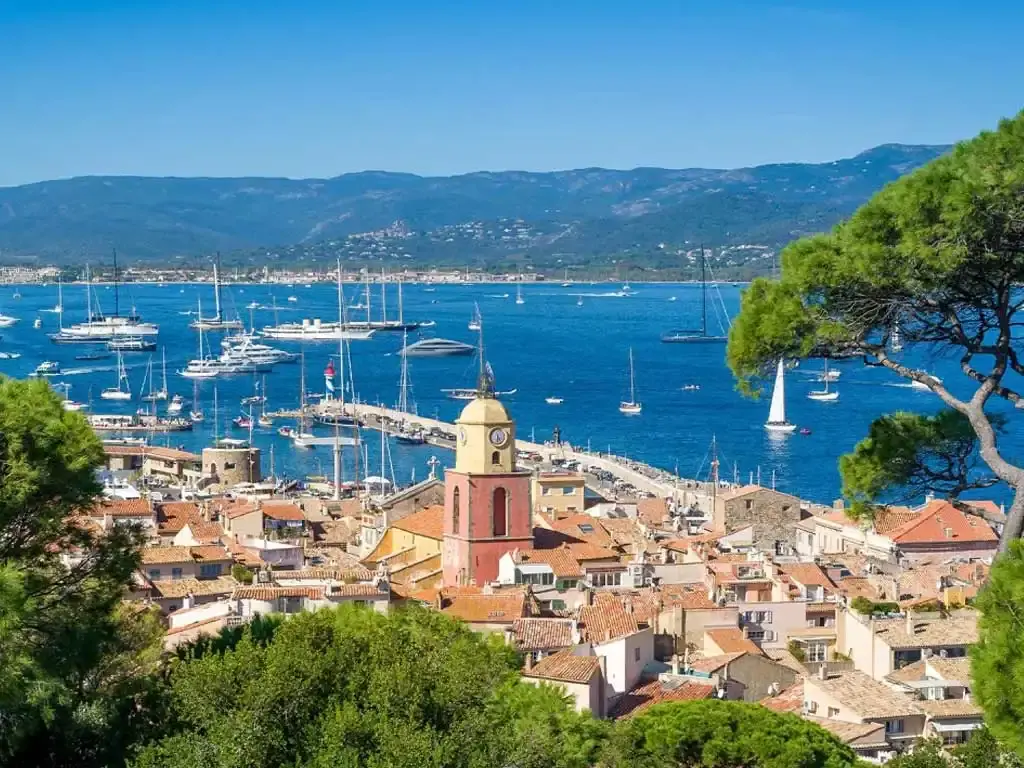
Located between Nice and Monaco, Saint-Jean-Cap-Ferrat is one of the most exclusive residential markets in the Mediterranean. The peninsula concentrates a limited number of properties, set within a particularly protected natural environment.
The finest estates benefit from vast grounds, mature vegetation, sea views, and a level of privacy that is hard to find in other resorts on the French Riviera. Proximity to Monaco, Nice International Airport, and the main marinas further enhances its appeal.
In this market segment, a property’s value cannot be assessed solely on the basis of its price per square meter. The size of the land, the history of the estate, the quality of the gardens, protection from prying eyes, and the ability to keep the real estate as an indivisible whole are all decisive criteria.
A symbol of ultra-prime real estate
Villa Les Cèdres illustrates the difference between a luxury villa and a true heritage estate. Its value rests on a combination of features that would be almost impossible to recreate today: fourteen hectares on Cap-Ferrat, a royal history, a renowned botanical garden, and an architectural ensemble developed over more than a century.
Properties of this category are rarely openly offered for sale. They are generally marketed discreetly, to a limited number of prospective owners capable of acquiring, maintaining, and preserving them.
Each transaction nevertheless helps establish new benchmarks for the Saint-Jean-Cap-Ferrat real estate market and, more broadly, for exceptional properties on the French Riviera.
Can you visit Villa Les Cèdres?
Unlike Villa Ephrussi de Rothschild, Villa Les Cèdres is a private property and is not open to visitors. Its buildings, gardens, and botanical collections are therefore not freely accessible to the public.
The estate can, however, be glimpsed from certain areas of Saint-Jean-Cap-Ferrat and the Bay of Villefranche-sur-Mer. Its inaccessible nature also contributes to the mystery surrounding this legendary property.
A unique property in the history of Cap-Ferrat
From Désiré Pollonnais to King Leopold II, and then from the Marnier-Lapostolle family to its current owner, Villa Les Cèdres has lived several lives without losing its identity. Each era has helped enrich its architecture, gardens, and botanical heritage.
Its historic sale, its location, and the richness of its grounds have made it one of the most famous properties on the Riviera. More than just a prestigious residence, Villa Les Cèdres embodies the heritage and timeless character of the finest estates in Saint-Jean-Cap-Ferrat.

A lire aussi