



What characterizes luxury real estate?
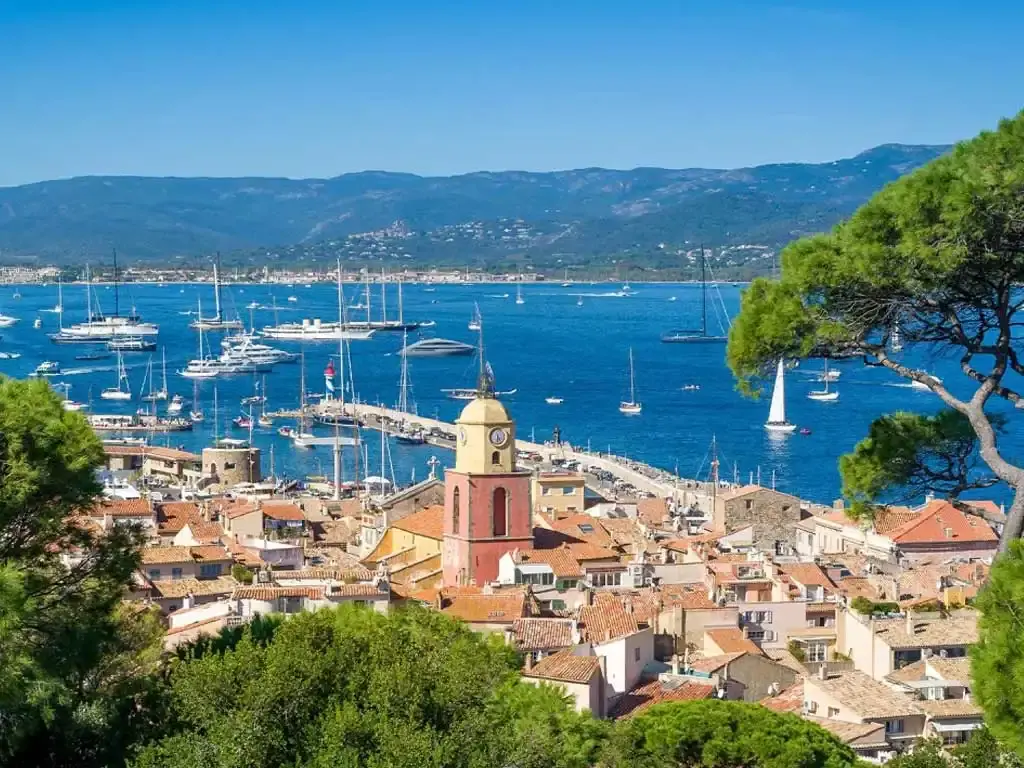
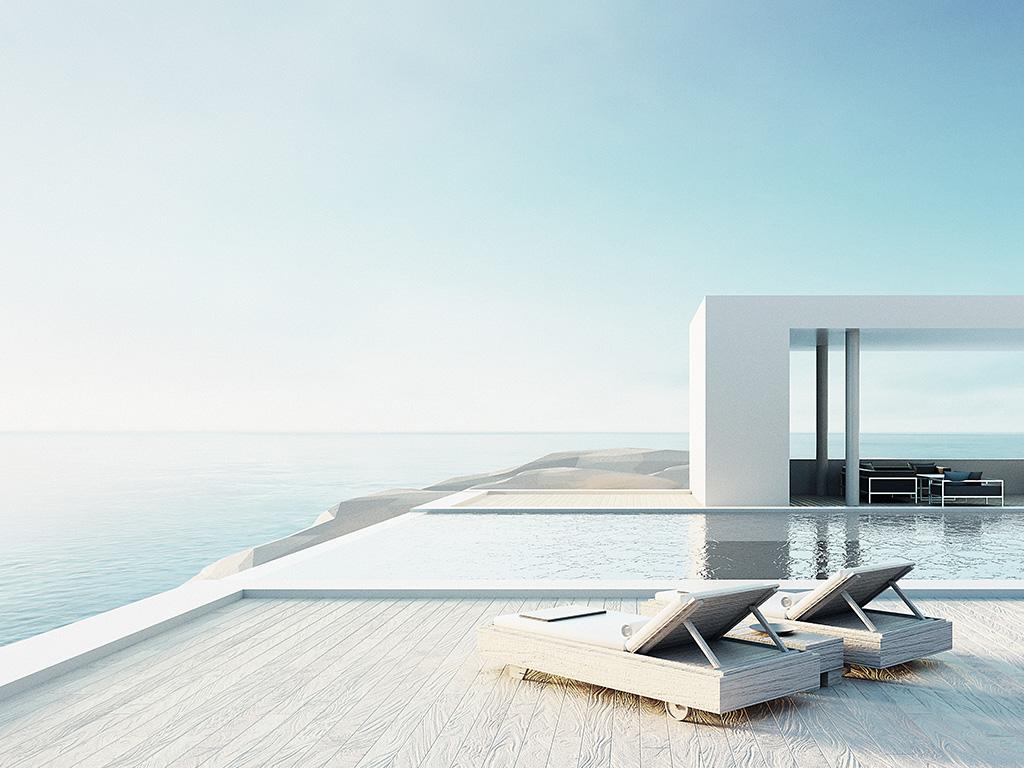
A contemporary villa overlooking the Mediterranean, a Paris townhouse, a historic property in Provence, a penthouse overlooking a capital city, or a chalet at the foot of the slopes: luxury real estate covers very different types of properties.
Yet there is neither a minimum size nor a universal price that alone can define a luxury property. What truly characterizes a prestigious property is more a combination of criteria: a sought-after address, a certain degree of rarity, remarkable architectural or heritage qualities, a privileged environment, and a level of amenities above the standards of its local market.
In exceptional real estate, value often lies in what cannot be reproduced.
How do you define luxury real estate?
Luxury real estate refers to the upper segment of the residential market. But this definition is necessarily relative.
An apartment considered exceptional in one city may correspond to a much more common market level in a particularly sought-after district of Paris, Cannes, Saint-Tropez, Megève, or Gstaad.
Prestige must therefore always be assessed in relation to its market and environment.
Several characteristics nevertheless make it possible to distinguish the most remarkable properties.
1. An exceptional location
In luxury real estate, the address is often the first factor of value.
It may be a villa located on the Saint-Tropez coastline, an apartment overlooking La Croisette in Cannes, a property on the Saint-Jean-Cap-Ferrat peninsula, a townhouse in a sought-after district of Paris, or even a chalet ideally located in Megève.
But the town or neighborhood alone is not enough.
Within a few hundred meters, a property’s value can vary considerably depending on:
-
its exposure;
-
its view;
-
its immediate surroundings;
-
its level of tranquility;
-
its proximity to the sea, the slopes, or a historic center;
-
the quality of access;
-
its lack of overlooking neighbors.
This is known as micro-location.
In the most exclusive markets, it is often what distinguishes a beautiful property from a truly exceptional one.
2. Rarity: what cannot be reproduced
Rarity is probably the most decisive criterion in luxury real estate.
An exceptional panoramic view, direct access to the sea, a particularly large plot, historic architecture, a dominant position, or a ski-in/ski-out location are all features that are difficult, if not impossible, to recreate.
This explains why two properties with similar surface areas or levels of amenities can have very different values.
A plot can be redeveloped. A house can be renovated. Interior features can be replaced.
An address, a view, or an exceptional setting generally cannot.
It is this irreplaceable quality that largely contributes to the value of the rarest properties.
3. Remarkable architecture and features
The type of property naturally contributes to its positioning.
Luxury real estate includes in particular:
-
contemporary villas;
-
historic properties;
-
townhouses;
-
prestigious apartments;
-
penthouses;
-
architect-designed houses;
-
Provençal bastides and farmhouses;
-
private estates;
-
castles;
-
mountain chalets;
-
waterfront properties.
Architectural quality, however, matters more than the property category alone.
Volumes, ceiling height, natural light, the flow of spaces, integration into the landscape, the nobility of materials, and the quality of a renovation all directly contribute to the perception and value of a property.
Some properties also have a particular heritage dimension: the signature of a renowned architect, remarkable history, Belle Époque architecture, original decorative elements, or a location in a protected environment.
4. Views and a privileged environment
In many destinations, the relationship between the property and its surroundings is essential.
On the French Riviera, a panoramic view of the Mediterranean can greatly influence the value of a villa or apartment.
In the mountains, exposure, views of the ranges, and proximity to the slopes play a similar role.
In Paris, a terrace overlooking an iconic monument, a private garden, or an open view can radically transform an apartment’s positioning.
These features directly contribute to the property’s rarity and are especially sought after when combined.
A property benefiting from a renowned address, an exceptional view, optimal exposure, and great privacy becomes much harder to compare.
5. Amenities that exceed market standards
High-end features naturally form part of the expectations associated with luxury real estate.
A swimming pool, spa, gym, home cinema, wine cellar, private elevator, multi-car garage, smart home systems, or dedicated staff areas can all enhance a property’s comfort.
But by themselves, they are not enough to turn a property into an exceptional one.
A pool can be built. A kitchen can be replaced. A home automation system can be upgraded.
The distinction lies more in the overall coherence of the property, the quality of execution, and its suitability to its surroundings.
At the very high end of the market, excellence is often found in less visible details: acoustics, the quality of the joinery, material selection, integration of technical equipment, circulation between indoor and outdoor spaces, and even the quality of landscaping.
6. Space, without a minimum surface area
Prestigious properties often offer substantial surface areas, but size is not an absolute criterion.
An apartment of 120 m² in an exceptional location may have more value and rarity than a much larger property in a less sought-after setting.
Conversely, some villas, estates, or family properties stand out precisely because of the exceptional size of their grounds and reception areas.
Surface area must therefore always be considered in context.
In sectors where land is extremely scarce, having a few hundred or thousand additional square meters can be a defining feature.
7. Confidentiality, a distinctive feature of the luxury market
Another characteristic of prestige real estate lies in the way certain properties are marketed.
The most exclusive properties are not necessarily publicly listed.
Some owners prefer a confidential sale in order to preserve their privacy, their assets, or simply the discretion of the transaction.
A segment of the exceptional real estate market therefore operates off-market, thanks to the relationships maintained between owners, advisors, family offices, and specialized professionals.
For a buyer seeking a particularly rare property, access to this confidential market can become just as important as reviewing properties officially offered for sale.
Is price enough to define a luxury property?
No, price is naturally an important indicator, but it cannot be used independently of the local market.
An apartment listed at two million euros may represent an extremely rare property in some cities and correspond to a relatively common segment in the most exclusive districts of Paris or in certain destinations on the French Riviera.
It is therefore more relevant to think in terms of positioning within the local market.
A true prestige property is generally situated at the upper end of its market and has characteristics that are rare enough to limit the number of genuinely comparable properties.
High-end real estate, prestige real estate, and exceptional real estate: what are the differences?
These expressions do not correspond to strictly defined legal categories. However, they do make it possible to distinguish different levels of rarity.
High-end real estate generally refers to properties offering a higher level of construction quality, features, and comfort than the mainstream market.
Prestige real estate generally adds to these qualities a sought-after address, remarkable architecture, or a privileged environment.
Exceptional real estate, on the other hand, concerns properties that are particularly difficult to replicate: waterfront villas, historic estates, remarkable townhouses, unique penthouses, large properties in extremely protected locations, or residences featuring an unusual combination of rare characteristics.
The boundary necessarily remains subjective.
Nevertheless, the more irreplaceable features there are, the closer the property comes to this notion of exception.
How is a prestige property valued?
Valuing a luxury property requires a different approach from that used in a conventional residential market.
When comparable properties are numerous, analyzing the price per square meter is a relevant indicator.
In exceptional real estate, this method quickly reaches its limits.
How can two villas be accurately compared if one has private access to the sea? How can a fully unobstructed view over Cannes Bay be valued? What premium should be assigned to several additional hectares around a Provençal property or to a particularly rare address in Paris?
The appraisal must then take into account simultaneously:
-
recent transactions in the area;
-
properties currently listed for sale;
-
the rarity of the location;
-
the property’s intrinsic characteristics;
-
its condition and architectural quality;
-
the land and outdoor areas;
-
the views and exposure;
-
the actual demand observed for this type of property.
In some very confidential markets, knowledge of off-market transactions is also decisive.
Does service form part of prestige real estate?
Yes, but it relates more to the real estate experience than to the definition of the property itself.
Clients in the prestige market generally expect in-depth expertise, strong availability, and above all complete confidentiality.
Support may involve many professionals: notaries, lawyers, tax advisors, architects, technical experts, financial institutions, or wealth advisors.
The role of the real estate professional is then not only to identify or market a property, but also to coordinate and secure the various stages of the project.
Since 1977, Michaël Zingraf Real Estate has been assisting French and international clients with the purchase, sale, rental, and valuation of exceptional properties.
Our knowledge of local markets, combined with our exclusive affiliation with Christie’s International Real Estate for the Provence-Alpes-Côte d'Azur region, enables our teams to operate in the main prestige real estate destinations in France and internationally.
FAQ – Prestige Real Estate
What is a prestige property?
A property described as "luxury" or "prestige" is one that stands out thanks to several characteristics above its market standards: a sought-after location, rarity, architectural quality, a privileged environment, remarkable views, or particularly refined features. Its price alone is not enough to define it.
From what price can we speak of luxury real estate?
There is no universal price threshold. An amount considered exceptional in one city may be relatively common in certain districts of Paris, in Saint-Tropez, Cannes, or in other highly sought-after international markets. The property’s positioning must therefore be analyzed in relation to its local market.
What are the main criteria of a prestige property?
The main criteria are location, micro-location, rarity, architectural quality, views, surroundings, volume, outdoor spaces, and the overall level of features. The most exceptional properties bring together several of these characteristics.
What is the difference between luxury real estate and prestige real estate?
The two expressions are often used as synonyms and do not correspond to regulatory categories. In common usage, prestige real estate generally refers to high-end properties that also benefit from a particularly rare address, architecture, or characteristics.
What is an exceptional property?
An exceptional property has extremely rare and difficult-to-replicate characteristics. This may be, for example, a waterfront villa, a unique penthouse, a historic estate, a property with an exceptional view, or a property located at an address where very few properties are available.
Why is location so important in luxury real estate?
Because it is one of the few characteristics of a property that cannot be changed. A house can be renovated or transformed; its address, exposure, view, and surroundings generally cannot. That is why micro-location plays a major role in enhancing the value of luxury properties.
How do you estimate the value of a luxury property?
Estimation is based on analysis of the local market, comparable transactions, and the property’s own characteristics. The rarer the property, the less relevant a simple comparison of price per square meter becomes. The quality of the address, the view, the land, the architecture, and the scarcity of supply must in particular be taken into account.
Are luxury properties always marketed publicly?
No. Part of the luxury market is marketed confidentially. Some owners do not want their property to appear on real estate portals or to be widely advertised. These properties are generally offered directly to a selection of qualified buyers through professionals with the appropriate network.
Is luxury real estate always a good investment?
No real estate investment offers an absolute guarantee of performance. Rare properties located in areas that remain consistently sought after can, however, benefit from a structurally limited supply. The quality of the purchase, the price paid, the location, holding costs, and market trends should always be examined before considering the wealth-building aspect of a purchase.

A lire aussi