



Contemporary art holds a distinctive place in the world of luxury. A work of art can radically transform an interior, enter into a dialogue with a property's architecture or, over the years, become a major piece in a private collection.
But who are today's most highly valued contemporary artists? There is no definitive ranking. An artist's value depends, among other things, on their presence in major collections, their institutional recognition, the rarity of their works and their performance on the secondary market.
After two years of contraction, the global art market returned to growth in 2025. According to the Art Basel & UBS Global Art Market Report 2026, sales reached approximately $59.6 billion, up 4% year on year. Public auction sales, meanwhile, rose by 9%.
From historic figures in contemporary art to artists who continue to reinvent their practice, several names hold a special place among collectors.
How is a contemporary artist's market value determined?
An artist's market value is not based solely on the spectacular price achieved by a work at auction.
The artist's career, the museums and institutions that exhibit their work, the galleries that represent them, their presence in renowned collections, and the provenance and rarity of their pieces all contribute to establishing their value.
The primary market, consisting mainly of sales made through galleries, thus coexists with the secondary market of auction houses and collectors.
Some works can command exceptional prices, while pieces by the same artist remain available at very different price points, depending on their period, medium, dimensions or provenance.
This is why discussing the “most highly valued” artists is more about identifying the leading names in the contemporary art market than drawing up a simple ranking by price.
David Hockney, a major figure in contemporary painting
With his Californian swimming pools, vividly coloured landscapes and instantly recognisable portraits, David Hockney has left a profound mark on art history since the 1960s.
A painter, draughtsman, photographer and pioneer in the use of digital tools, the British artist has continually experimented with techniques and media.
His artistic significance is matched by an exceptional market value. In November 2018, Portrait of an Artist (Pool with Two Figures) sold for $90.3 million at Christie’s, setting what was then the world auction record for a work by a living artist.
Beyond this result, Hockney remains a leading figure for institutions and international collectors alike.
Jeff Koons, bridging popular culture and the art market
Jeff Koons' monumental sculptures and perfectly reflective surfaces have made the American artist one of contemporary art's most instantly recognisable figures.
Balloons, everyday objects and references to popular culture are transformed into works whose highly sophisticated fabrication contrasts with the apparent simplicity of their subjects.
His celebrated Rabbit, a stainless-steel sculpture created in 1986, sold for $91.075 million at Christie’s in 2019, setting a new world auction record for a living artist at the time.
Koons is a particularly striking example of the relationship that can exist between contemporary art, design, luxury and popular culture.
Yayoi Kusama, art as an immersive experience
Polka dots, mirrors, pumpkins and spaces that seem to extend into infinity: the world of Yayoi Kusama is instantly identifiable.
Over several decades, the Japanese artist has developed a body of work that extends far beyond the traditional boundaries of painting or sculpture. Her celebrated immersive installations, Infinity Mirror Rooms, place visitors directly at the heart of the artwork.
This ability to create a complete artistic experience partly explains Kusama's exceptional international reach. Her paintings, sculptures and installations are now held in major private and institutional collections.
She also embodies contemporary art's evolution towards works capable of profoundly changing the perception of a space.
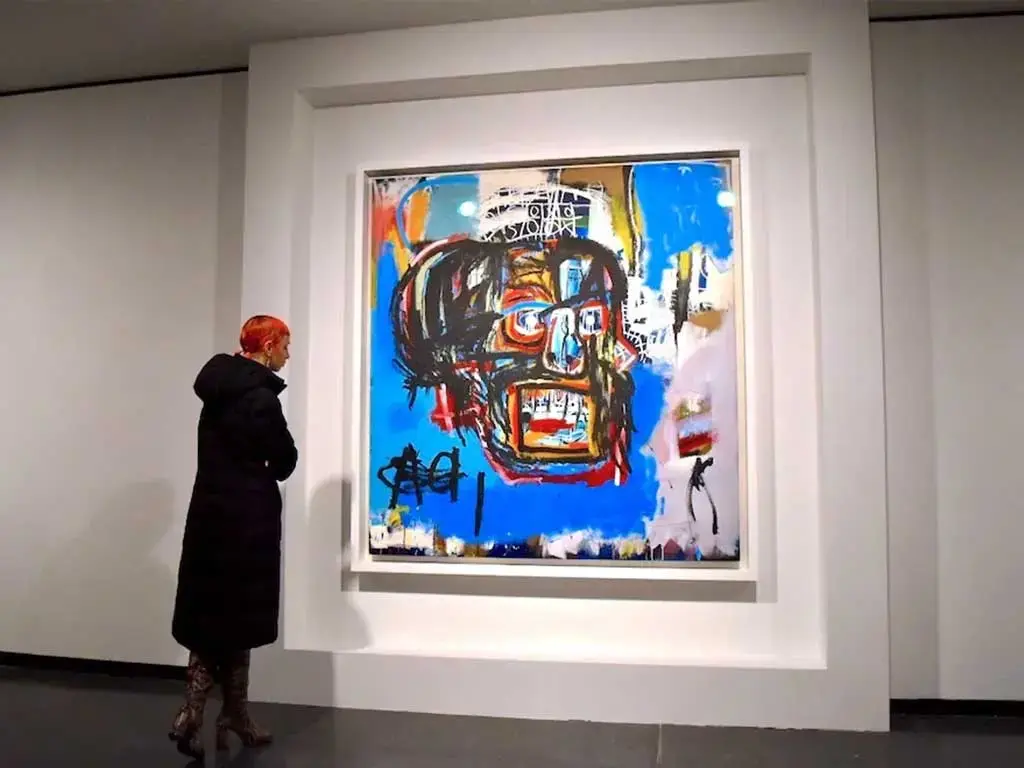
Jean-Michel Basquiat, an iconic body of work
Having died in 1988 at just 27, Jean-Michel Basquiat remains one of the major figures in art of the second half of the 20th century.
His work combines painting, drawing, words, symbols, historical references and influences from New York's urban culture. His highly recognisable visual language has profoundly influenced subsequent generations.
The relative rarity of his output, the historical significance of certain works and his presence in international collections have helped make Basquiat one of the most sought-after artists on the art market.
Several of his works now rank among the highest-value transactions for a contemporary artist.
Banksy, from street art to major collections
Banksy's identity remains unknown, but his visual language has become universal.
Through stencilling, the British artist creates an often satirical body of work addressing consumer society, politics, war and the contradictions of the contemporary world.
Banksy has also profoundly challenged the traditional conventions of the art market. In 2018, the partial self-destruction of Girl with Balloon immediately after its sale at Sotheby's became one of the most widely publicised events in recent auction history.
Renamed Love is in the Bin, the work itself became part of contemporary art history.
Banksy thus demonstrates how a movement originating in public spaces can gradually find its way into museums, major collections and international auctions.
Takashi Murakami, bridging contemporary art and Japanese culture
Multicoloured flowers, manga-inspired characters and saturated compositions: the world of Takashi Murakami is one of the most recognisable in contemporary Japanese art.
Through the Superflat movement, Murakami explores, in particular, the connections between fine art, popular culture, Japanese animation and consumer society.
His work extends far beyond the traditional boundaries of the art market. His collaborations with fashion, music and major international luxury houses have enabled him to reach an audience considerably broader than that of galleries.
This ongoing encounter between popular culture and artistic creation accounts for much of his influence.
Jenny Saville, a new representation of the body
British painter Jenny Saville has made her name through her monumental depictions of the human body.
Her figurative painting, characterised by particularly thick paint and an almost sculptural approach to flesh, brings a fresh perspective to a subject that has featured in art history for centuries.
Associated with the Young British Artists generation, she has gradually established herself as one of the leading figures in contemporary British painting.
Her works are highly sought after on the international market, and her practice enjoys significant institutional recognition.
Jean-Michel Othoniel: sculpture in dialogue with architecture
French artist Jean-Michel Othoniel holds a distinctive place in this selection.
His sculptures, notably incorporating glass, metal and geometric forms, maintain a close relationship with their surroundings.
Installed in museums, gardens, public spaces or historic buildings, his works can transform the very perception of the places that host them.
His work perfectly illustrates the intersection of art, architecture and landscape, a theme that is also central to the design of the most remarkable contemporary properties.
JR: the urban landscape as a gallery
French artist JR has chosen façades, monuments and urban landscapes as his canvases.
His monumental photographs, installed in public spaces, explore the relationship between residents, the places they inhabit and the way those places are portrayed.
From the Louvre to major cities around the world, his interventions temporarily transform existing architecture and invite viewers to see their surroundings in a new light.
This relationship between artwork, architecture and place connects his practice with contemporary thinking about how art can change our perception of a space.
Contemporary art, architecture and prestigious real estate
Collecting a work of art is not simply a matter of hanging it on a wall. In the most remarkable properties, architecture, furniture, light and artworks form a cohesive whole.
A monumental sculpture can give structure to a garden. A large-scale painting can become the focal point of a living room. A contemporary installation, meanwhile, may have been conceived specifically for the architecture that houses it.
This relationship is particularly evident in certain architect-designed villas and exceptional apartments.
In Cannes, for example, the spacious contemporary villas of La Californie or Super Cannes often offer generous proportions and expansive windows, allowing paintings and sculptures to be showcased in surroundings bathed in Mediterranean light.
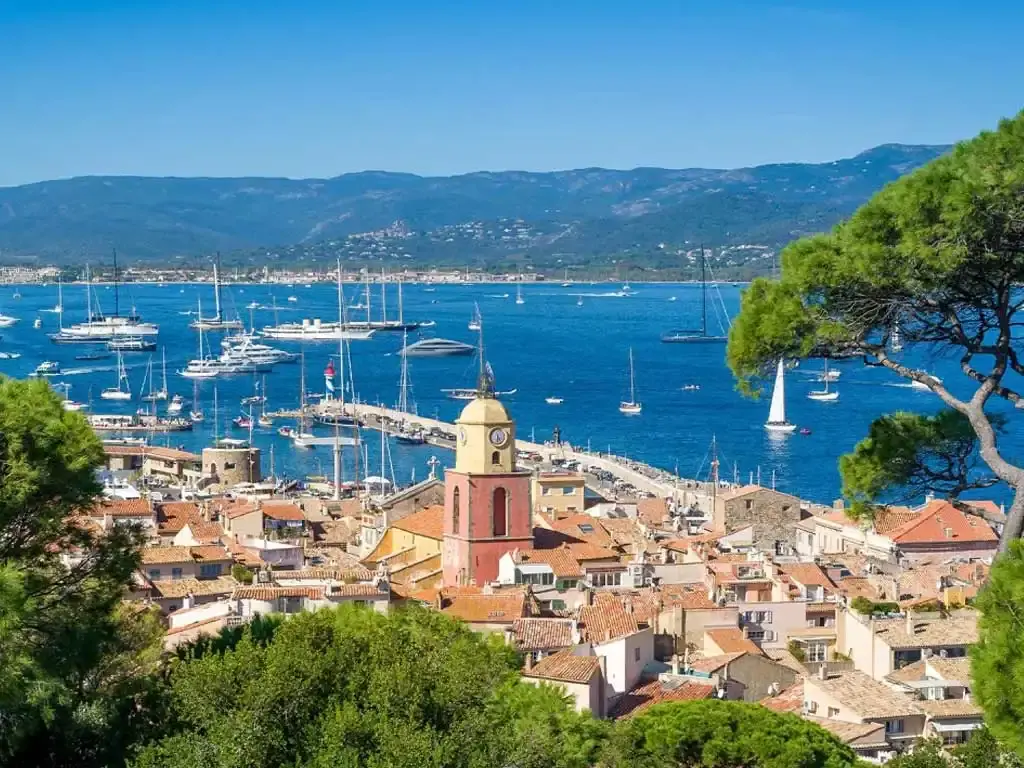
In Saint-Tropez, contemporary architecture, landscaped gardens and outdoor artworks can also enter into a dialogue with the natural landscape.
In Paris, the juxtaposition of contemporary art and classical architecture takes on another dimension: abstract works, photographs and contemporary sculptures find a natural home in the capital's Haussmann-style apartments, private mansions and penthouses.
This close relationship between art and the home explains why the worlds of collectors and luxury real estate so often intersect.
Paris: an essential destination for collectors
Museums, foundations, international fairs and galleries also make Paris one of the world's leading centres for contemporary art.
From the Marais to Saint-Germain-des-Prés and the Matignon district, the capital brings together both long-established galleries and spaces dedicated to new generations of artists.
To explore further, discover our selection of the finest art galleries in Paris.
Which contemporary artists should you follow today?
The art market evolves rapidly, and reputation alone is never enough to determine the future value of a work.
The emergence of new generations, an increasingly international collector base and the role of major institutions are continually reshaping the artistic landscape.
Auction results are a useful indicator, but they should never be considered in isolation. A work's artistic merit, provenance, condition, rarity and place within the artist's career are equally decisive.
For a collector, the best starting point ultimately remains one of the art market's simplest principles: above all, acquire a work you want to live with.

A lire aussi