



For some buyers, it is above all a family home intended to be kept and passed down. For others, it combines personal use, asset diversification, and the possibility of seasonal rental. In 2026, one trend is nonetheless confirmed in the most sought-after real estate markets: buyers favor destinations able to combine quality of life, property scarcity, and lasting appeal. The global prime residential real estate market rose by 3.2% in 2025 according to Knight Frank, but the gaps between destinations remain significant. In France, some seaside and Alpine holiday markets have notably outperformed Paris. There is therefore no single ideal destination for all second homes. The right choice depends above all on the intended use, the holding period, and the property’s wealth-preservation characteristics.
Why buy a prestigious second home?
A second home has one particularity: its value is not measured exclusively by its financial performance.
It also provides a chosen place, a setting in which to gather one’s family, a way to build a story around a property, and, in some cases, the opportunity to pass on a real estate asset located in a market where supply is structurally limited.
This dimension partly explains the continued interest in the most established destinations.
That said, prestige does not automatically mean profitability.
The quality of an investment depends on the purchase price, market trends, holding costs, taxation, the ability to rent out the property, and, above all, its ability to remain desirable over time.
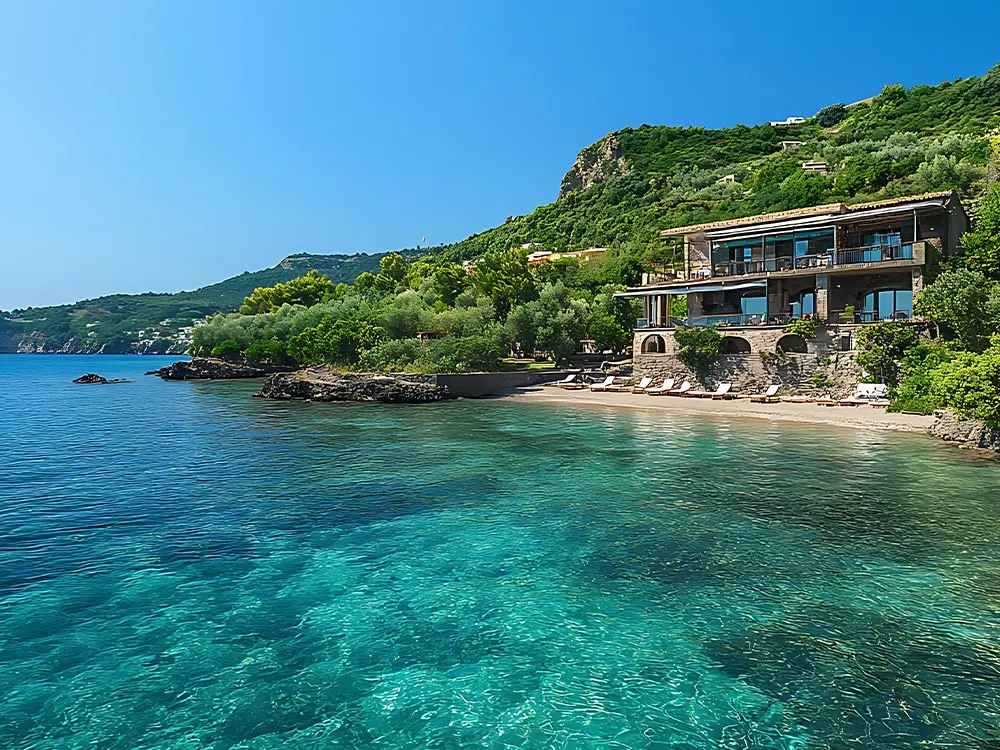
A property in an irreproducible location has a clear advantage in this respect: sea view, waterfront, large plot, remarkable architecture, immediate proximity to the slopes, or a particularly coveted address.
Côte d’Azur: the scarcity of the Mediterranean coastline
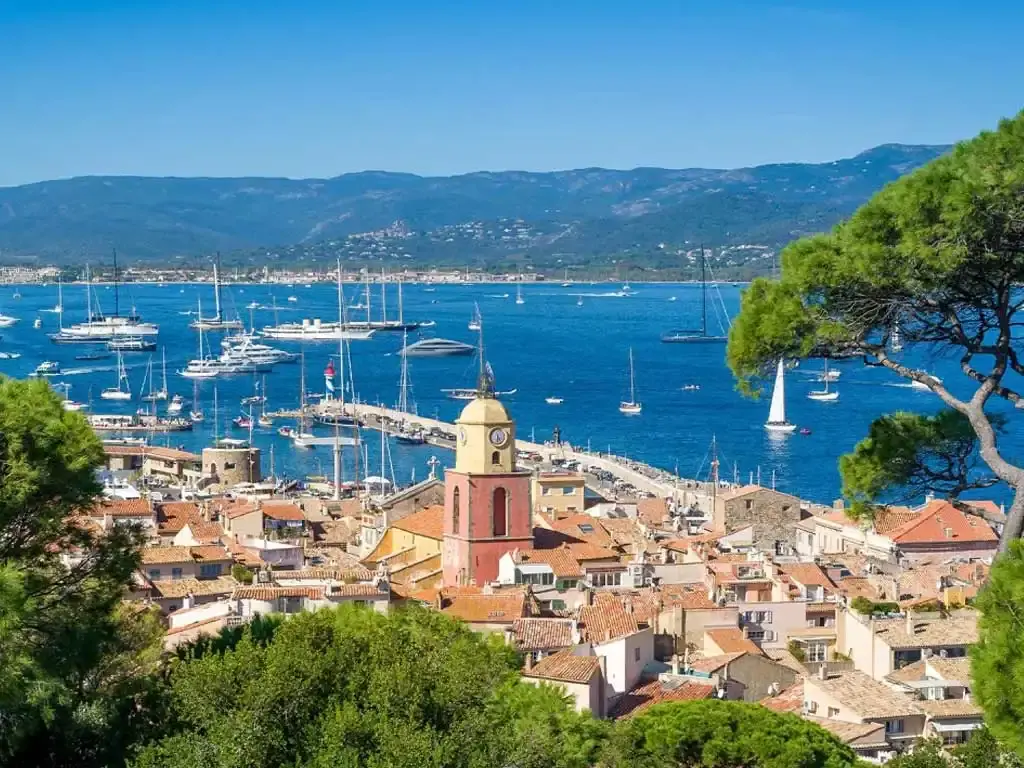
The Côte d’Azur naturally remains one of the main French markets for high-end second homes.
From Saint-Tropez to Saint-Jean-Cap-Ferrat, via Cannes, the Cap d’Antibes, Mougins, Nice, or Villefranche-sur-Mer, each micro-market nonetheless has its own characteristics.
In Saint-Tropez, properties located close to the village, Pampelonne, or benefiting from an exceptional seaside setting represent a particularly constrained market. In Cannes, apartments close to the Croisette follow a different logic from the large villas in Californie or Super-Cannes. Around Monaco, the scarcity of locations and the pressure exerted by the Monegasque market also contribute to the appeal of neighboring towns.
The data published in 2026 by Knight Frank also show the ability of certain French holiday markets to stand out: Saint-Tropez recorded an increase of around 5% in prime values in 2025.
For a second home, one of the strengths of the Côte d’Azur also lies in its potential use well beyond the summer season. Cannes, Nice, Monaco, and several seaside resorts benefit from economic, cultural, and events activity throughout the year.
Which properties should be favored on the Côte d’Azur?
At the very top end, value is based above all on features that cannot be reproduced: panoramic views, a dominant position, immediate proximity to the sea, a large plot, or a particularly discreet address.
In this context, a property combining several of these criteria may have greater wealth-preservation appeal than a property that is merely spectacular in terms of size or amenities.
Provence: a second home designed as a family house
Provence follows a different logic.
In the Alpilles, the Luberon, or the Aix region, buyers are mainly looking for mas, bastides, estates, and character properties with beautiful grounds and a preserved environment.
Saint-Rémy-de-Provence, Eygalières, Maussane-les-Alpilles, Gordes, Lourmarin, or Aix-en-Provence thus offer several different profiles of second homes.
The quality of the building is important, but the property’s lasting value often lies just as much in the land, the views, the olive groves, privacy, and proximity to a sought-after village.
For an acquisition intended to be kept over the long term, Provence also offers a particular advantage: a property can gradually become more than a vacation spot and be used several months a year.
The distinction between primary and secondary residence then becomes less clear.
The French Alps: the rise of the four-season model
Luxury real estate in the French Alps has evolved profoundly.
The chalet used only a few weeks during ski season is gradually giving way to residences designed to be occupied in both winter and summer. Hiking, cycling, golf, gastronomy, and events allow major resorts to extend their tourist season.
Megève particularly illustrates this evolution thanks to its genuine village center and its lifestyle, which is independent of the ski area alone.
Courchevel, Méribel, Val d’Isère, and Chamonix follow different logics, but share a decisive characteristic for real estate: the available land in the best locations is particularly limited.
Price trends, however, must be analyzed resort by resort. Knight Frank notes, for example, a strong increase in the prime segment in Méribel and Courchevel in 2025, while other French destinations saw more moderate changes.
This dispersion recalls an essential rule of mountain real estate: buying “in the Alps” does not mean much. The resort, the neighborhood, the altitude, the exposure, the views, and the actual proximity to the slopes can significantly alter a property’s value.
Gstaad and the Swiss Alps: extreme scarcity
For an international clientele, Gstaad remains one of the emblematic addresses of the Alpine market.
Its appeal rests on a combination that is particularly difficult to reproduce: natural surroundings, quality infrastructure, discretion, architectural tradition, and a limited supply of properties.
According to UBS, Gstaad was in 2026 the most expensive holiday home market in the entire Alpine arc, at around CHF 25,000/sqm in the upper segment of the market. Prices for Alpine holiday homes also rose by nearly 4% on average in 2025.
The luxury market itself can reach even higher levels: UBS estimates average values in the luxury segment at around CHF 45,000/m² in Gstaad and Verbier.
This scarcity is nevertheless accompanied by a specific regulatory framework. The acquisition of real estate in Switzerland by certain people domiciled abroad is governed by the Lex Koller and may require cantonal authorization. Each project must therefore be assessed according to the buyer’s situation and that of the property.
Arcachon Bay: the search for a family legacy
Arcachon Bay represents another kind of second-home market.
Pyla-sur-Mer, Arcachon, Le Moulleau and Cap-Ferret in particular attract buyers looking for a family home close to the ocean, in an environment that is much less urban than the major resorts of the Côte d’Azur.
The market also has a strong scarcity dimension.
Waterfront properties, large plots close to the beach, historic villas in the Ville d’Hiver, or certain homes with direct views over the Bay are assets whose supply remains, by definition, limited.
Here too, a few dozen or a few hundred meters can profoundly alter a property’s positioning. Proximity to the water, the quality of the plot, orientation and architectural character are decisive.
For a buyer wishing to create a family residence intended to be kept for several generations, this dimension may matter more than a search for immediate return.
Paris and Neuilly: the second home becomes a patrimonial pied-à-terre
In Paris and in certain areas of the Paris region, the notion of a second home often takes the form of a pied-à-terre.
Reception apartments, properties with terraces, private mansions or apartments located in remarkable buildings appeal to French and international clients who want a Parisian address while keeping their primary residence elsewhere.
This acquisition is driven less by a leisure logic than by that of urban heritage.
Unlike certain mountain or coastal markets, Paris was not among the most dynamic French prime markets in 2025. Knight Frank notes a much more moderate increase than in the best-performing Alpine resorts.
This does not diminish the capital’s patrimonial appeal: it simply shows that the perceived security of a prestigious address and short-term performance are two different things.
In this type of market, the exact quality of the property becomes decisive: floor level, views, outdoor space, layout, natural light, the building’s architecture and the quality of the renovation can create substantial value gaps.
Mauritius: second home and heritage in the heart of the Indian Ocean
Mauritius occupies a special place on the international market for prestigious second homes.
Its appeal is not based solely on its tropical climate or lagoons. For several years, the island has developed a genuine high-end real estate market, structured around gated residences, contemporary villas, beachfront properties, luxury apartments and integrated developments offering services comparable to those of major international resorts.
The North, around Grand Baie, Mont Choisy and Cap Malheureux, is one of the most established markets. Grand Baie combines beaches, shops, restaurants, schools, services and water sports, making year-round use of the property possible.
On the West coast, Tamarin and Rivière Noire offer a different approach. Buyers there are more often looking for wide open spaces, ocean or mountain views, proximity to marinas and a preserved residential environment.
The Mauritian market also has an important feature for an international clientele: foreign nationals can acquire certain properties under schemes regulated by the Economic Development Board, notably the Property Development Scheme (PDS), as well as other authorized property categories.
Under the PDS, the acquisition of a property valued at more than USD 375,000 can notably allow a foreign buyer to obtain a residence permit, valid as long as they retain ownership, subject to compliance with the applicable regulatory conditions.
However, this aspect must remain secondary in the choice of property: an administrative or tax advantage alone does not make a property a suitable investment.
Which properties should be favored in Mauritius?
As in other prestige markets, micro-location remains decisive.
Properties benefiting from direct access to the lagoon, a waterfront position, a permanently unobstructed sea view or a location within a sought-after estate have a rarity that new developments cannot always replicate.
Villas located on golf courses form another important segment of the market, especially when they combine landscaped surroundings, services, security and access to the estate’s facilities.
The rental market may also come into the equation. With around 1.4 million tourist arrivals in 2025, the island benefits from significant international traffic and the high-end properties on the North and West coasts continue to attract the attention of international investors seeking both personal use, rental potential and liquidity.
For a second home, Mauritius also offers an advantage that is difficult to compare with European destinations: its seasonality is reversed and its climate allows for use spread widely throughout the year.
It can therefore complement an asset portfolio that already includes a residence in Europe, while offering a genuine long-term family destination.
Acquisition by a non-resident remains subject to specific rules, however. The type of real estate program, the necessary authorizations, financing arrangements, taxation and residence conditions must be carefully verified before any transaction.
How do you choose a prestigious second home?
The choice of a second home should begin with its intended use rather than the abstract idea of finding “the best investment”.
A property used regularly does not follow the same criteria as one primarily intended for rental. A family home meant to be kept for twenty years will not be selected in the same way as an asset whose medium-term resale is an important objective.
Several factors therefore need to be assessed simultaneously: the rarity of the location, the depth of demand, holding costs, regulatory and tax constraints, the true rental potential and the ease with which the property can be resold.
Taxation in particular deserves a specific analysis.
In France, the taxe d'habitation still applies to second homes, and some municipalities may impose an increase of between 5% and 60%. Property tax is also still payable by owners, whether they are French tax residents or non-residents.
The rules governing tourist rentals should also be checked locally before including forecast rental income in a purchase decision.
Property quality remains more important than market trends
When it comes to a prestigious second home, the destination is only part of the equation.
Within the same area, a truly rare property can retain a very different level of appeal from that of the average market.
A waterfront villa, an apartment with exceptional views, a ski-in ski-out chalet, a large plot in the Alpilles or a seafront villa on the Arcachon Bay belong to micro-markets whose supply cannot be easily increased.
It is precisely this inability to replicate certain features that is one of the main foundations of long-term value in prestige real estate.
Getting support when acquiring a second home
A prestigious second home often sits at the intersection of several dimensions: a family project, personal enjoyment, assets and sometimes investment.
Its purchase therefore requires far more in-depth knowledge than the price per square metre alone.
Since 1977, Michaël Zingraf Real Estate has supported French and international clients in the search for and acquisition of exceptional properties in France and abroad, notably on the French Riviera, in Provence, in the Alps, on the Arcachon Bay, in the Paris region and in Switzerland.
The aim is less to identify a theoretically “better” destination than another than to find the property whose location, rarity and intrinsic qualities truly match the buyer’s project.
FAQ – Prestigious second home
What is a prestigious second home?
A prestigious second home is a dwelling that is not used as a primary residence and that has features above the standards of its market: a particularly sought-after location, remarkable architecture, views, land, a privileged setting or high-end amenities.
Where should you buy a luxury second home in France?
The French Riviera, Provence, the French Alps, the Arcachon Bay and Paris are among the main French destinations for prestige real estate. However, the choice depends on the intended use, the length of ownership and the type of property sought.
Is a second home a good investment?
It can be a patrimonial asset, but no performance is guaranteed. Future value depends in particular on the location, purchase price, rarity of the property, market trends, taxation and the costs associated with ownership.
Can you rent out your second home when you are not using it?
Yes in many cases, but the rules on short-term rentals vary depending on the municipality and the type of property. It is essential to check local regulations, reporting obligations and tax rules before purchasing.
What are the most important criteria when buying a prestigious second home?
Micro-location, rarity, build quality, surroundings and ease of access are particularly important. For a long-term patrimonial project, features that cannot be replicated — such as a view, land, a beachfront location or immediate proximity to the slopes — deserve special attention.
What costs should you expect for a second home?
In addition to the purchase price and transaction-related fees, you should take into account local taxes, maintenance, insurance, any co-ownership charges, works, garden or pool upkeep and, where applicable, rental management fees. These costs should be included in the overall analysis of the project.

A lire aussi