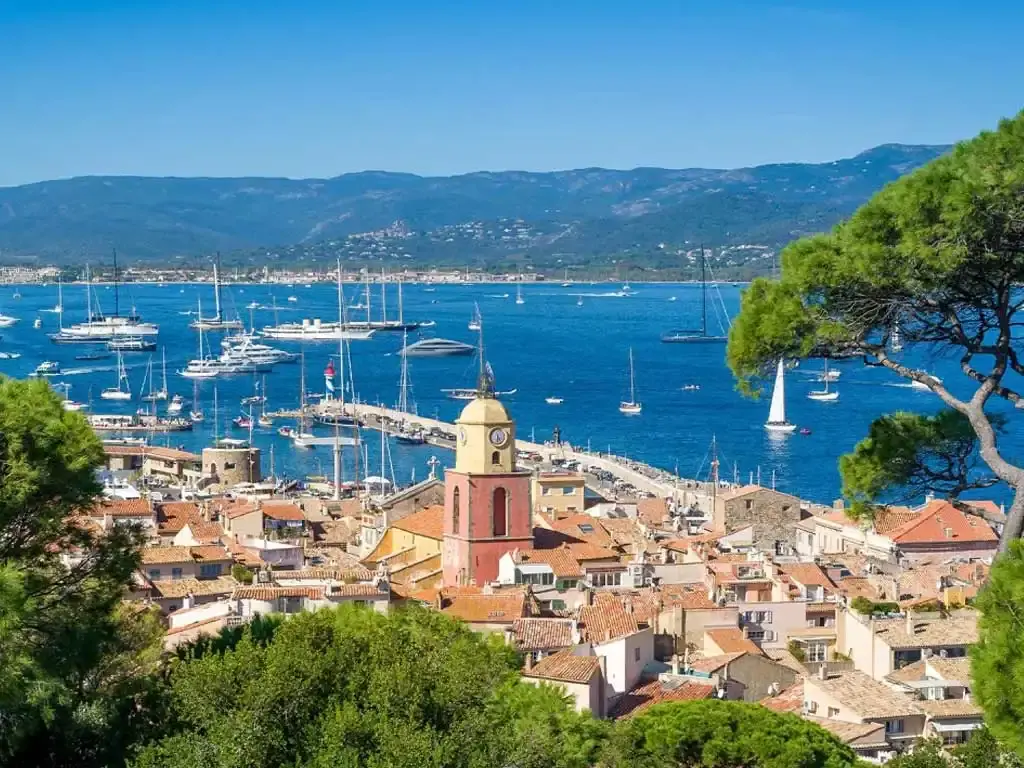




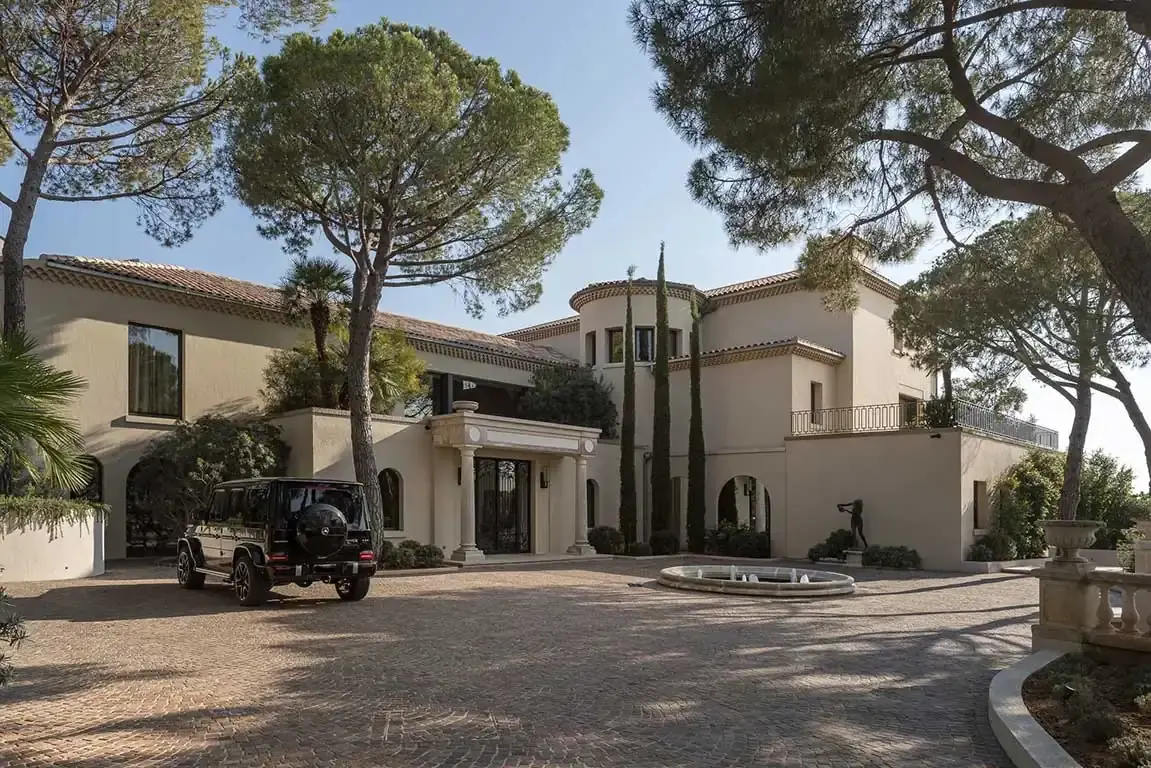
The artist created several major works here, directly inspired by the luminous volumes of the house, its exotic garden, and the views it then offered over the Bay of Cannes. Successively called Villa Fénelon, La Californie, or Villa Picasso, the property was restored for Marina Picasso in 1987 before taking its current name, Pavillon de Flore.
Its eclectic architecture, grand reception rooms, symmetrical facade, and terraced garden make this former winter residence one of the notable witnesses to Cannes’s holiday heritage. More than just a historic home, this villa in Cannes Californie remains inseparable from one of the most productive periods in Pablo Picasso’s career.
From Villa Fénelon to Pavillon de Flore
Before becoming one of the houses most closely associated with Pablo Picasso, the Pavillon de Flore was known as Villa Fénelon. Its history began in the early 20th century, when the hills above Cannes welcomed numerous winter residences intended for an aristocratic and international clientele.
A winter residence built around 1920
In 1903, General Viscount de Salignac-Fénelon had a plot surveyed in the northern part of the garden of Villa Alexandra, the property of his father-in-law, Eugène Tripet, former French consul in Moscow. However, construction of the house appears to have begun only around 1920.
Designed as a winter residence by architect Henri Piquart, Villa Fénelon was built with the assistance of several artisans and contractors from Cannes and Paris. Its eclectic architecture reflects the care devoted to the grand holiday villas built in Cannes in the early 20th century.
The house is organized around an axis of symmetry running through the vestibule and the grand salon. Its ordered south facade, opening onto the garden, is enlivened by a central projection, a balcony, a loggia, and balustrades. The terraces laid out on the slope made it possible to connect the house gradually with its landscaped garden.
Pablo Picasso’s arrival at La Californie
Pablo Picasso acquired the property in 1955 and moved in with Jacqueline Roque. The house then took the name La Californie, after the district in which it is located. Sheltered by its gates and by a garden with exotic vegetation, it offered the artist a more intimate setting, away from the bustle of the Croisette.
Picasso quickly turned the reception rooms into places of creation. The grand salon became his main studio and gradually filled with paintings, sculptures, personal objects, and works from his own collection. In this house, the boundary between daily life and artistic work almost completely disappeared.
From the upper floor and the balconies, the artist enjoyed views over the Bay of Cannes and the Lérins Islands. The villa, its openings, its furnishings, and its garden became subjects of representation themselves. Picasso described these compositions inspired by the interior of La Californie as true “interior landscapes.”
Between 1955 and 1961, the house accompanied a particularly fertile period in his work. Picasso produced paintings, drawings, and sculptures there, while also receiving artists, photographers, dealers, and friends in a studio that became inseparable from his image.
From Villa Picasso to Pavillon de Flore
After Picasso left for the Mas Notre-Dame-de-Vie in Mougins, the property remained closely associated with his time there. It was then regularly referred to as La Californie or Villa Picasso, two names that reflect the place the house had taken in the painter’s personal and artistic history.
The house was restored in 1987 for Marina Picasso, the artist’s granddaughter. This renovation accompanied the adaptation of the property to new uses while preserving the main characteristics of its architecture. The swimming pool laid out in front of the south facade also appears to date from this intervention.
Today known as the Pavillon de Flore, the villa remains a private property. Its significance rests both on its eclectic architecture, its terraced garden, and its exceptional connection with Pablo Picasso, who made it a place of life, hospitality, and creation for several years.

A lire aussi